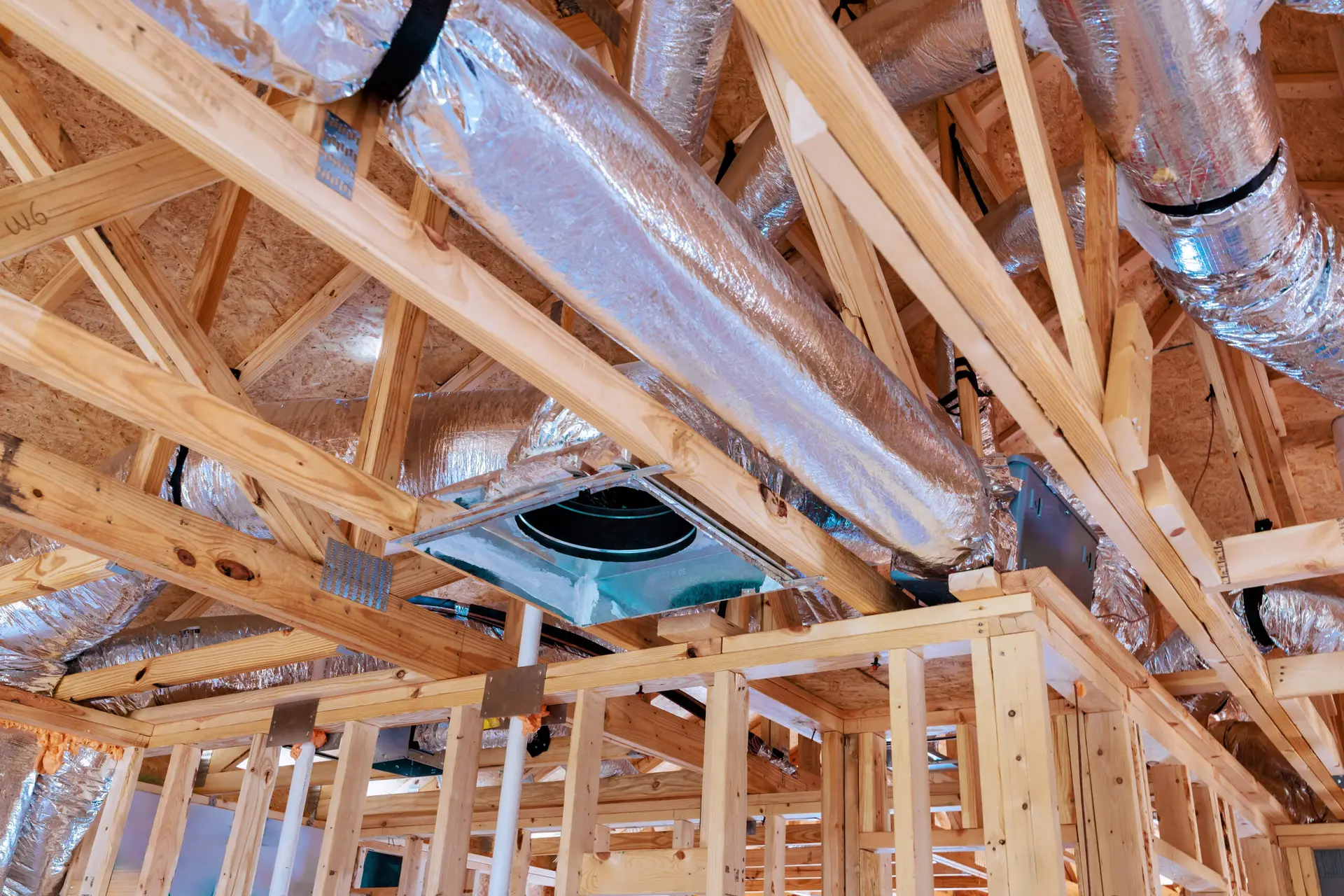
Why September Is the Best Time to Schedule HVAC Maintenance in Las Vegas
As the summer heat fades into cooler September nights in Las Vegas, it's an ideal time for HVAC maintenance. This period, from Labor Day to late October, allows for inspecting and cleaning your system without extreme temperatures. September is crucial for addressing summer wear and tear, ensuring efficiency when you need it. Don’t wait for the first cold snap—proactive maintenance can save you from costly emergencies and keep your home comfortable all year round.
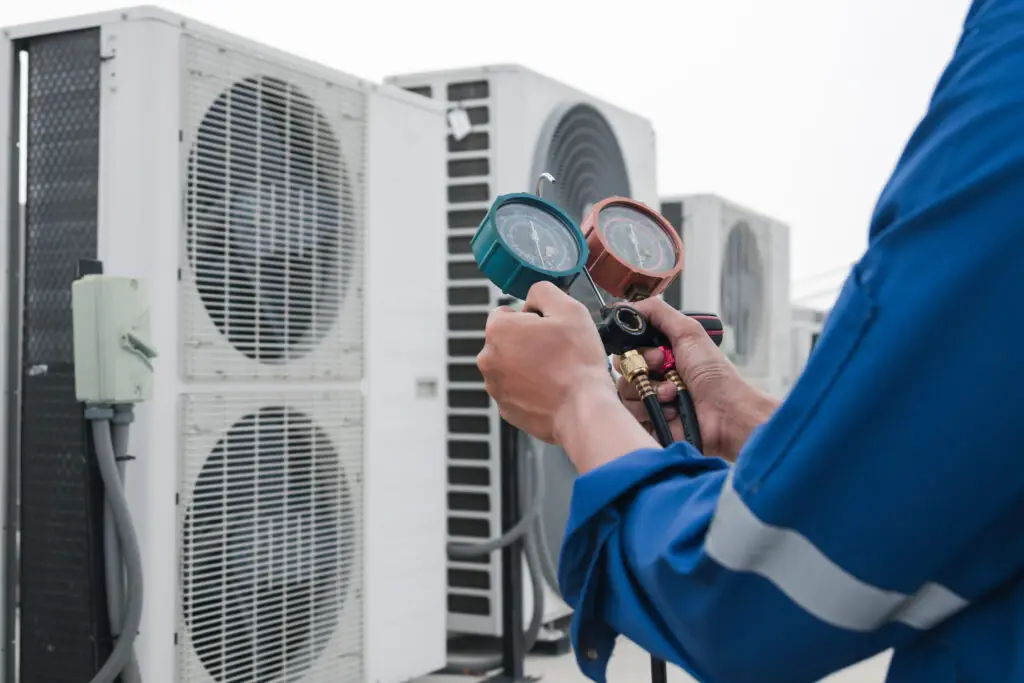
There is a night every September in the Las Vegas Valley when the air conditioning finally stops running at two in the morning. It has been cycling more or less continuously since May. Then the overnight low slips into the sixties, the compressor shuts off, and the house or the building goes quiet for the first time in four months.
That night is the signal. It is the start of a short window — roughly Labor Day through late October — when equipment is no longer under load, the heat has not been asked for yet, and technicians still have open slots. In Southern Nevada that window is the single best time of year to have HVAC equipment inspected, cleaned, and corrected.
Here is the reasoning, in plain terms.
The shoulder season is real, and it is short
Las Vegas does not get a gentle autumn. Summer afternoons routinely run in the low hundreds through August, September eases back into the mid-nineties, and by late October daytime highs are usually sitting in the low eighties. The swing between a September afternoon and a September night can be thirty degrees or more.
That gap matters mechanically. During the cooling season, shutting a system down for service means shutting down comfort — or, in a commercial building, shutting down a sales floor or a dining room on a 108-degree day. Nobody wants that call. In September, a unit can be taken offline for an hour in the morning and nobody notices.
It also matters diagnostically. Equipment that has just finished four months of near-continuous runtime is showing you exactly what the summer did to it. Wait until March and you have lost the evidence.
Your equipment just finished the hardest stretch of its year
Extreme heat and airborne dust do specific, predictable things to HVAC components. September is when those things are visible and cheap to fix.
Run capacitors.
Capacitors are the most heat-sensitive component in the system. A capacitor that spent the summer inside a rooftop cabinet or beside a south-facing condenser degrades in measurable ways — it loses capacitance well before it fails outright. A technician with a meter can read a weak capacitor in under a minute. A failed one on the first cold morning, or the first hot one next May, is a no-heat or no-cool call.
Contactors.
Every cooling cycle closes and opens the contactor. After a Las Vegas summer, contacts are commonly pitted, burned, or beginning to weld. This is a low-cost part that causes high-cost outages.

Condenser coils.
This is where the desert earns its reputation. Fine valley dust, construction dust, and landscaping debris pack into the coil fins all summer. A fouled condenser coil raises head pressure, which raises amp draw, which shortens compressor life and raises the power bill the whole time. Coil cleaning in September is the highest-value single task on the list.
Refrigerant charge and leaks.
Thermal cycling works on brazed joints, flare fittings, and Schrader cores. A small leak that ran all summer shows up in a September superheat and subcooling check before it becomes a system that cannot hold temperature next June.
Blower motors, belts, and bearings.
On belt-driven commercial units, summer runtime stretches belts and wears bearings. Both are audible and measurable in September and neither is an emergency yet.
Drain pans and condensate lines.
Four months of condensate leaves behind biological growth and scale. A line that is 80 percent blocked will pass water in September and back up into a ceiling in the spring.
And then there is the heat side, which nobody has tested since March
This is the part that catches people. In a climate where heating runs maybe eight to twelve weeks a year, the furnace or the gas heat section of a packaged unit has been sitting idle since early spring. Nothing about a hot summer improves it.
September is when to run the heat deliberately, on a mild day, with someone qualified watching:
— Ignition sequence and flame sensor operation
— Burner condition and flame appearance
— Heat exchanger inspection for cracking or corrosion
— Gas pressure at the manifold
— Combustion analysis and carbon monoxide testing
— Flue and venting integrity
— Safety controls — limit switches, pressure switches, rollout switches
Finding a cracked heat exchanger in September means you have two months to plan and budget. Finding it on the first cold Tuesday in December means making an expensive decision under pressure, with a building that has no heat. That is not a scare tactic — it is scheduling arithmetic.
The other half of the argument is the calendar
Southern Nevada HVAC demand comes in two spikes. The first real cold snap — typically somewhere in November — produces a wave of no-heat calls in a single week, because everyone turns the heat on for the first time at once. The second comes in April and May, when everyone discovers what the winter did to their air conditioning right as temperatures climb.
Between those two spikes sits September and early October. Scheduling is flexible. Non-emergency work can be booked at a time that suits the building rather than the dispatch board, and parts that need ordering can be ordered without a building waiting on them.
If you have a preventative maintenance agreement, this is when the fall visit belongs. If you do not have one, this is the easiest time of year to start one, because the first inspection is not competing with emergency calls.
What this looks like for a commercial building
For facility managers and property managers, a September service visit should produce a written record, not just a signature on a work order. At minimum, ask for:
— Amp draws and capacitor readings per unit, recorded by unit tag
— Refrigerant pressures, superheat and subcooling per circuit
— Filter sizes, quantities, and condition — with a restock plan
— Coil condition before and after cleaning
— Economizer damper and actuator function
— Belt condition and tension
— Combustion readings on every gas heat section
— A prioritized list separating “fix now,” “budget for this fiscal year,” and “monitor”
That last item is what turns maintenance into planning. A September report is what a capital request in November gets built on.
What this looks like for a home
For homeowners, the September list is shorter but the logic is identical:
— Replace filters, and check whether the size and MERV rating actually suit the system
— Have the condenser coil cleaned after a summer of valley dust
— Have the capacitor and contactor tested rather than assumed
— Have the condensate drain cleared
— Run the heat once, deliberately, before you need it
— Have the thermostat’s heating changeover verified
Running the heat for ten minutes in September also burns off the dust that has settled on the heat exchanger, which is the source of that burning smell in December. Better to deal with it while the windows can be open.
The honest version
Maintenance does not make equipment immortal. A fifteen-year-old rooftop unit that has spent every summer of its life in Las Vegas sun is going to need replacing, and a September tune-up will not change that. What maintenance does is move the decision from an emergency to a plan, catch the cheap failures before they become expensive ones, and keep the system running at the efficiency it was designed for instead of the efficiency a dirty coil allows.
That is worth doing. And it is worth doing in the eight weeks a year when it is easy.
Prestige Mechanical services commercial and residential HVAC, refrigeration, and commercial kitchen equipment across the Las Vegas Valley. September and early October are when our schedule is most open — and when this work is worth the most.