Rooftop Unit (RTU) Basics: Common Issues and PM Tips
A commercial rooftop HVAC unit in Las Vegas works in some of the harshest conditions in the building: roof temperatures well above the air, constant dust, and months of nonstop runtime. Here's what actually fails, why, and the maintenance schedule that prevents most of it.

Stand on a flat commercial roof in the Las Vegas Valley in July and put your hand near the membrane. The surface runs far hotter than the air temperature — a dark single-ply membrane in direct desert sun is a griddle. Now put a packaged rooftop unit on it, ask it to reject heat into 108-degree air, and run it twelve to sixteen hours a day for four months straight.
That is the operating environment for most commercial HVAC in Southern Nevada. Rooftop units are the default here because they save floor space, keep noise off the sales floor, and are simple to replace. They are also in the worst thermal and dust conditions of any equipment in the building, with nobody looking at them.
This is a working overview for facility and property managers: what is inside the box, what actually fails on Las Vegas roofs, and what a maintenance program should cover.
A packaged rooftop unit is a complete system in one cabinet. Understanding the sections makes service reports readable.
— Condenser section — condenser coil and fan(s), rejecting heat to outdoor air
— Compressor(s) — scroll compressors on most light commercial equipment; larger units may be staged or multi-circuit
— Evaporator section — coil, metering device (typically a TXV), drain pan and condensate drain
— Supply air section — the blower, belt-driven or direct-drive, feeding the building’s duct system
— Filter rack — pleated filters, usually two-inch, sometimes four
— Heating section — on most Las Vegas units a gas-fired heat exchanger with burners, ignitor, flame sensor and induced draft; some use electric heat strips
— Economizer — outside and return air dampers with an actuator and controller, for free cooling
— Controls and electrical — contactors, run capacitors, transformer, safety switches
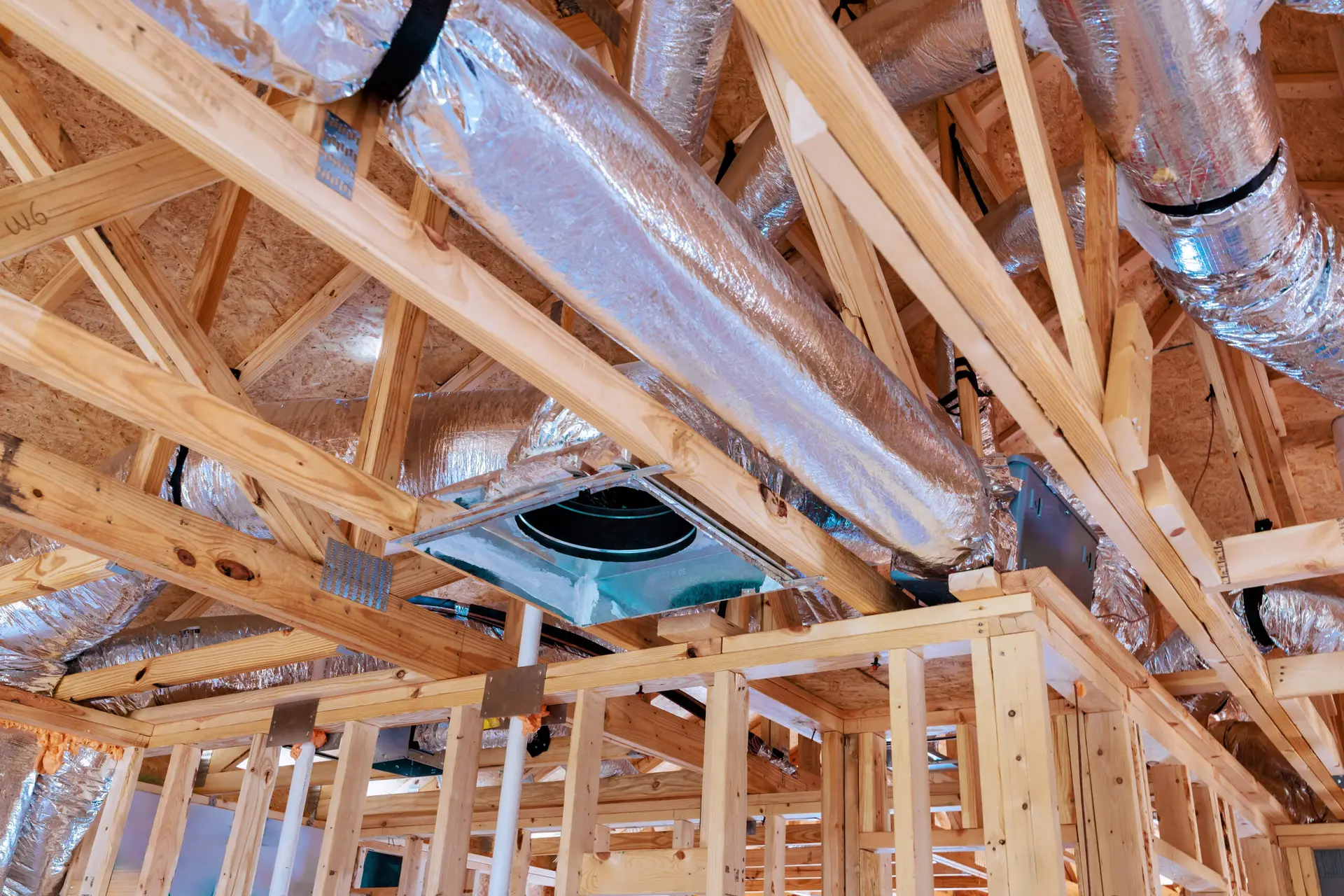
— Roof curb — the framed, flashed base the unit sits on, with the duct penetrations
Almost everything in that list has a Las Vegas–specific failure story.
This is the number one issue, and it is not close. Fine valley dust, construction dust, and landscaping debris pack into the condenser fins. Microchannel coils, common on newer equipment, foul faster and are less forgiving to clean than traditional fin-and-tube.
The consequence is mechanical, not cosmetic. A restricted condenser cannot reject heat, so head pressure climbs — which means higher amp draw, higher energy cost every hour the unit runs, higher discharge temperatures, and accelerated compressor wear. In extreme cases the unit trips on high-pressure safety and the tenant reports it as “no cooling,” when it is a dirty coil.
Coil cleaning is the highest-return line item in any Las Vegas PM program. In a dusty location it is not an annual task.
Run capacitors.
Capacitors are electrolytic components with a temperature rating, sitting in a metal cabinet on a hot roof. They degrade. One rated at 45 microfarads that now reads 33 will still start the motor on a mild day and fail on a hot one — exactly when you need it. Capacitance should be measured and recorded at every visit, not eyeballed for bulging. Bulging is the late stage.
Contactors.
Every call for cooling closes the contactor, and a Vegas cooling season is a very large number of cycles. Contacts pit, then burn, then in the worst case weld closed and leave the compressor running continuously. Cheap part, standard replace-on-condition item.

Economizers.
The economizer is the most-neglected component on the roof and the one that wastes the most money. Actuators fail, linkages seize, damper blades bind with dust, and outside air sensors drift. The failure modes cut both ways:
— Stuck closed — you lose free cooling during the mild months, running mechanical cooling when 60-degree outside air would have done the job.
— Stuck open — far worse in July. The unit pulls 100 percent outside air at 108 degrees and tries to cool it: comfort complaints, enormous energy cost, and a compressor running well outside its design envelope.
A stuck-open economizer is one of the most common root causes behind “this unit can’t keep up” in a Las Vegas summer — and one of the cheapest to correct once someone actually goes up and checks it.
Belts and bearings.
On belt-driven supply fans, belts stretch and glaze and sheaves wear. A loose belt slips, cutting airflow and capacity across the whole building. Bearings dry out. Both are audible and measurable long before failure, which makes them ideal PM catches.
Condensate drains and drain pans.
Pans corrode, drains clog with biological growth, and secondary drains are often plugged or never installed correctly. A blocked primary drain means water finds the duct penetration, and the first evidence is a stained ceiling tile below.
The gas heat section.
Heating runs a short season here, so it sits unused most of the year and gets inspected even less. Common findings: dirty or misaligned burners, a flame sensor oxidized enough to cause nuisance lockouts, a failing hot surface ignitor, corrosion in the induced draft assembly, and — the one that matters most — cracking or corrosion in the heat exchanger. That inspection and combustion testing belong on the fall visit, before the first cold week, not after a no-heat call.
The curb and the duct penetrations.
Curb gaskets deteriorate, flashing lifts, and duct connections at the curb leak. That costs twice over: conditioned air escapes into the curb cavity, and unconditioned plenum air gets pulled in. It rarely shows up as a complaint, which is why it rarely gets fixed.
The right frequency depends on the site, not on a brochure. Three things drive it here: dust exposure (a unit beside an active construction site or an unpaved lot fouls far faster than one on a downtown office roof), runtime (a restaurant on extended hours loads equipment much harder than a five-day office), and consequence of failure (a rooftop serving a kitchen or a sales floor has a different downtime cost than one serving a back office).
A common structure for valley properties is quarterly visits, with two seasonally critical ones:
— Spring (pre-cooling): coil cleaning, capacitor and contactor testing, charge verification via superheat and subcooling, amp draws, belt and bearing check, economizer function test, drain clearing, filters.
— Fall (pre-heating): heat exchanger inspection, burner and ignition check, combustion analysis and CO testing, flue and venting check, safety controls, plus a second coil and filter service after summer.
The two shoulder visits handle filters, drains, and anything flagged for monitoring. In high-dust locations, coil cleaning and filter changes move to a shorter interval, a judgment call made on the roof, not in an office.
This is where a maintenance program earns its cost. Ask that every visit produce, per unit tag:
— Compressor and condenser fan amp draws against nameplate
— Measured capacitance against rated microfarads
— Suction and discharge pressures, superheat and subcooling
— Supply and return air temperatures, and the split
— Filter size, quantity and condition; coil condition before and after service
— Economizer position, actuator function, outside air sensor reading
— Belt condition and tension, or direct-drive motor condition
— Combustion readings on the fall visit, plus photos of anything flagged
Then a prioritized findings list separating repair-now from budget-this-year from monitor. That list is what a capital planning conversation gets built on — and what keeps a fifteen-year-old unit from becoming a surprise in August.
Two more things worth asking. First, what refrigerant each unit uses: the industry has been moving off R-410A to lower-GWP refrigerants in new equipment, and that affects replacement planning more than day-to-day service. Second, whether anything is still under manufacturer warranty — and whether documented maintenance is a condition of it. It often is.
Prestige Mechanical services commercial rooftop units, split systems, VAV systems, and ductwork across the Las Vegas Valley, along with commercial refrigeration and kitchen exhaust. If you are not sure what is on your roof, what condition it is in, or when it was last actually serviced, that is the place to start.