Your air conditioner in Las Vegas might log two thousand hours of runtime in a single cooling season. Your furnace, in a normal valley winter, runs a small fraction of that. Below is a heating system tune-up checklist written for that reality.
That gap is why heating maintenance gets skipped here, and why the argument for it has to be made differently than it is in Chicago. You are not servicing a furnace because it works hard. You are servicing it because it sits still for eight months and then gets asked to work on a cold night with no warning.
The list below is itemized on purpose. If you are going to pay for a heating tune-up — from us or from anyone — you should know exactly what the technician is doing and, more usefully, what they are measuring.
—Why “21-point inspection” is a meaningless phrase
Every HVAC company advertises a multi-point inspection. Nobody publishes the points. The number is marketing, and it is not comparable between companies — one contractor’s twenty-one points can be twenty-one visual glances, and another’s fourteen can include three instrument readings that actually tell you something.
The useful distinction in any heating system tune-up checklist is not how many items are on it. It is how many of them produce a number.
A technician who looks at a burner and says it looks fine has told you very little. A technician who records a temperature rise of 68°F on a unit with a nameplate range of 35–65°F has found a real problem — and you can see it on the report.
01The actual heating system tune-up checklist
Combustion side
This is the part that matters most, both for reliability and for safety.
- Heat exchanger inspection. Visual inspection of accessible surfaces for cracks, rust-through, and separation at the seams. On many units a full inspection means pulling the burner assembly, and on some it requires a camera.
- Burner cleaning and flame pattern check. Burners should light smoothly across all ports with a stable blue flame. Lazy, yellow, or lifting flames indicate a problem upstream.
- Manifold gas pressure. Measured at the valve with a manometer and compared against the nameplate specification. Overfiring cracks heat exchangers; underfiring wastes capacity and causes condensation.
- Ignition system. For hot surface ignition, igniter resistance is checked in ohms — a drifting igniter is a predictable failure. For spark ignition, electrode gap and condition.
- Flame sensor and flame signal. The sensor is cleaned and the flame signal is read in microamps. A weak signal is the single most common cause of intermittent overnight lockouts, and it is invisible unless someone measures it.
- Inducer motor and draft proving. Amp draw against nameplate, plus verification that the pressure switch proves draft correctly rather than being jumpered or sticking closed.
- Venting and flue. Inspected for corrosion, disconnected sections, improper slope, and blockage. In Southern Nevada, nesting material in flue terminations after a long warm season is common enough that it is worth checking specifically.
- Safety controls. Limit switches and rollout switches verified as functional, not bypassed.
- Carbon monoxide check at the appliance and in the occupied space.
Air side
Airflow problems masquerade as heating problems, so this half of the list is not filler.
- Temperature rise across the heat exchanger. Supply temperature minus return temperature, compared to the nameplate range. This is the most informative single measurement on a gas furnace. High rise means restricted airflow and a heat exchanger running hotter than designed. Low rise means the opposite.
- Blower wheel condition. A dust-loaded wheel loses a surprising amount of capacity. In the valley, wheels get dirty faster than people expect.
- Blower motor amp draw against nameplate, and capacitor testing under load for PSC motors.
- Filter replacement or, for commercial accounts, a review of the filter program and change interval.
- Static pressure where the setup allows it, which tells you whether the duct system is fighting the equipment.
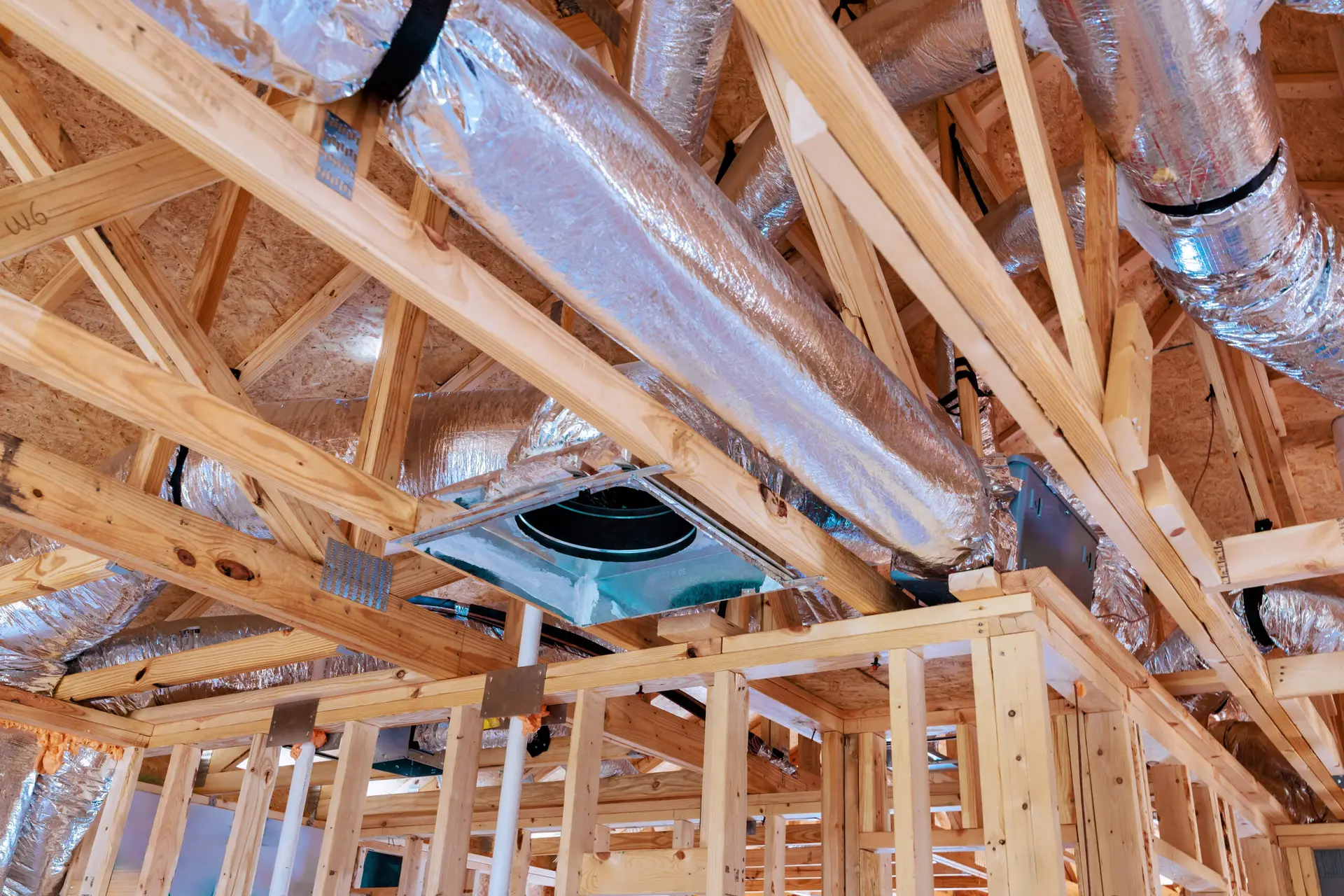
- Accessible ductwork checked for disconnections and obvious leakage.
Controls and electrical
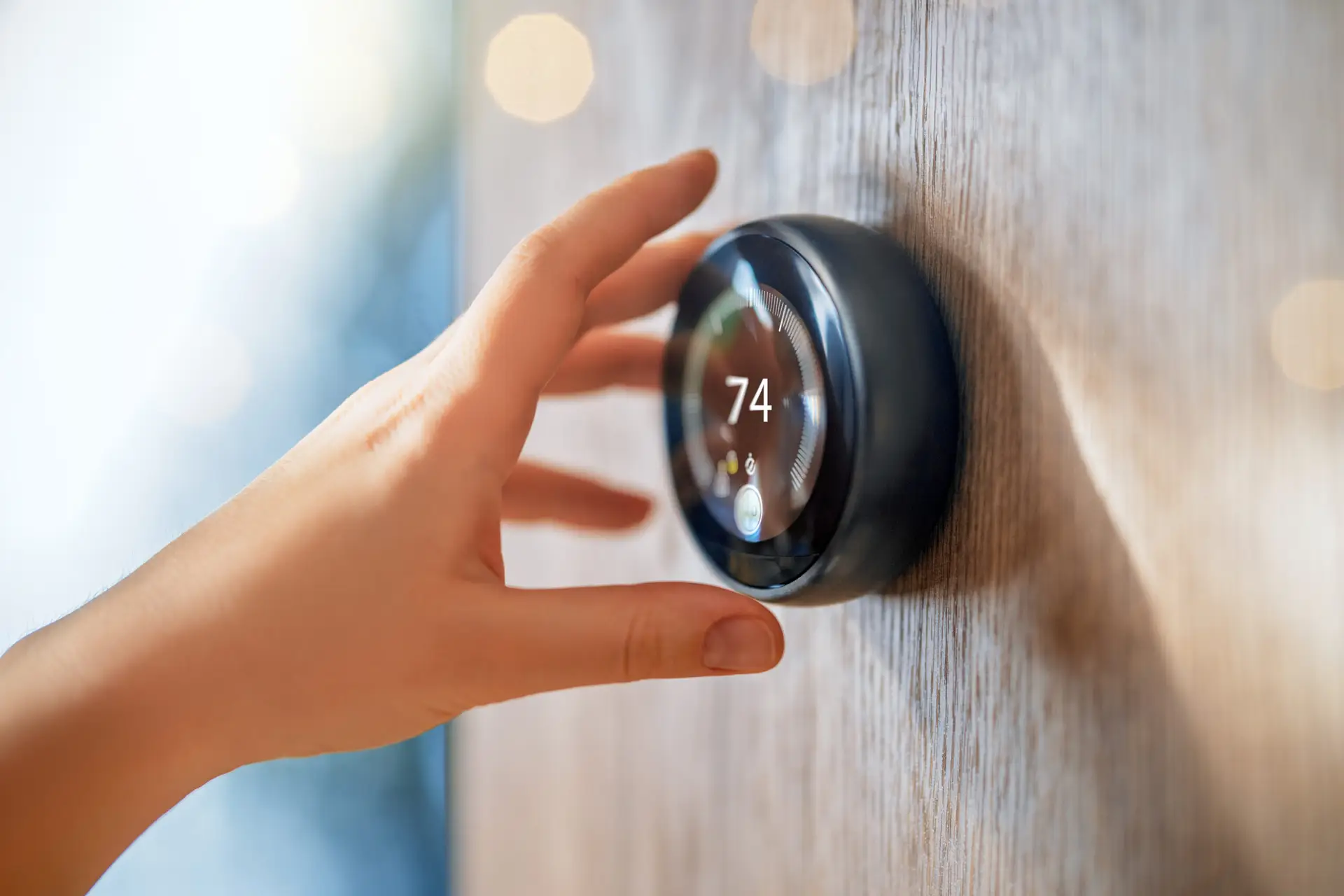
- Thermostat operation, staging, and programming — including whether the schedule still reflects how the space is actually used
- Heat/cool changeover verification, which matters here because October and November days can call for both
- Electrical connections tightened at the control board and disconnect
- Contactor and relay inspection
If you have a heat pump instead of a furnace
A meaningful number of valley homes and light commercial spaces heat with a heat pump, and the heating system tune-up checklist is different. Reversing valve operation, defrost board and defrost cycle verification, auxiliary heat strip amp draw, sequencer operation, and outdoor coil condition all replace the combustion items above. If your contractor gives you a gas furnace checklist for a heat pump, they are not looking at your equipment.
02What a tune-up will not do
Candor is more useful than a sales pitch here.
It will not guarantee your system won’t fail. Equipment fails. What a tune-up catches is the subset of failures that announce themselves in advance — a drifting igniter, a weak flame signal, a capacitor out of tolerance, a rising temperature rise trend.
It will not fix a cracked heat exchanger. If a crack is found, the honest options are replacement of the heat exchanger or replacement of the unit, and on older equipment the second is usually the reasonable one. A tune-up finds the crack; it does not resolve it.
It will not make an undersized or badly ducted system perform correctly. If your system was wrong when it was installed, maintenance keeps it running but does not fix the design.
It is not a substitute for replacement on equipment near end of life. At a certain age, maintenance spend is better redirected toward planning the replacement on your timeline.
03Red flags on a heating system tune-up visit
Worth knowing regardless of who you call:
- A verbal “everything looks good” with no written report and no recorded measurements
- A cracked heat exchanger diagnosis with no photo, no camera footage, and no offer to show you
- A tune-up that takes fifteen minutes — the combustion checks alone take longer than that
- A recommendation to replace the entire system before anyone has measured gas pressure or temperature rise
- Pressure to decide on the spot
A legitimate finding survives a second opinion. Any contractor confident in their diagnosis should be comfortable with you getting one.
04Commercial additions to the heating system tune-up checklist
If you are a facility manager rather than a homeowner, the same heating system tune-up checklist applies per unit, plus a few things:
- Economizer damper and actuator operation, which in a dusty environment is a frequent failure point and an invisible one
- Belt condition and alignment on belt-drive units
- Building automation schedules and setpoints verified against current occupancy
- A per-unit written report, because you will need it when a tenant complains in January
—Schedule your heating system tune-up
Call
702-867-5389 or visit prestigemechanicalvegas.com.
Tell us what equipment you have — gas furnace, rooftop unit, heat pump, or a mix — and whether it is residential or commercial, and we will get you on the calendar while the fall schedule is still open.