What certifications and training our technicians hold
In the heat of Las Vegas, a failing HVAC system can lead to hasty decisions. Understanding a contractor's credentials is vital; a Nevada license is just the beginning, with varying scopes of service. Knowing the right questions can save you money. Learn how to verify qualifications for top HVAC service. Read on!
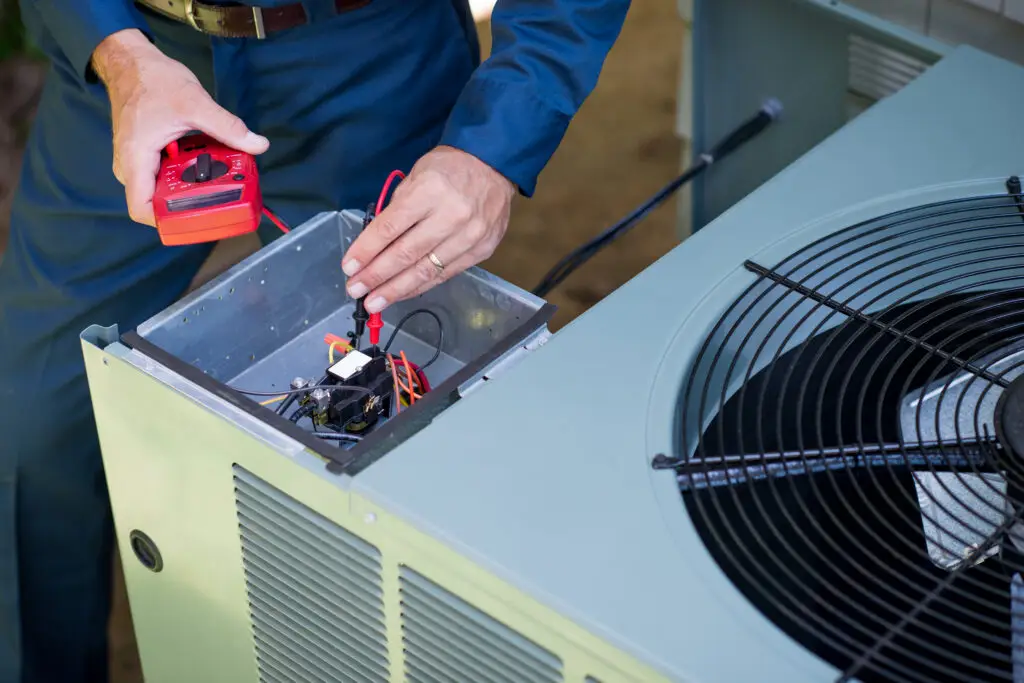
In the third week of a 110-degree stretch, most Las Vegas HVAC contractors are booked days out. That is exactly when a van you have never heard of pulls into your lot two hours after you call, and nobody asks a single question about who is driving it. It is an understandable decision to make at 4 p.m. with a dining room full of people and a rooftop unit that quit. It is also the most common way a repair gets done twice.
Credentials are boring right up until they are the only thing between you and a second service call. So here is what ours are, what each one actually authorizes someone to do, and — more useful to you than any badge on a website — how to check any Nevada contractor yourself in about two minutes.
—Start with the license
Prestige Mechanical holds Nevada contractor license #0094552.
That number by itself is only half the story, because in Nevada “licensed” is not one thing. The Nevada State Contractors Board issues licenses by classification, and the classification defines the legal scope of work. A contractor can be perfectly licensed and still be outside their lane on your job.
01What the HVAC classification actually covers
Refrigeration and air-conditioning work falls under classification C-21, which is divided into subclassifications that each authorize a different slice of the trade:
- C-21a — Refrigeration: systems producing temperatures below 50°F, including walk-ins and insulated spaces, plus the related insulation, ducts and controls
- C-21b — Air conditioning: installation, repair, service and maintenance of temperature-control equipment and its ductwork
- C-21c — Sheet metal: fabrication and installation of ducts, flashings, gutters and similar sheet metal work
- C-21d — Maintenance: repair and replacement of existing components — compressors, motors, coils — short of full replacement or design changes
- C-21e — Solar air conditioning
- C-21f — Chilled and hot water systems: boilers, chillers, cooling towers and the piping that connects them
- C-21g — Industrial piping
This matters practically. A contractor holding only a maintenance subclassification can swap your condenser fan motor but is not authorized to redesign the system. If you are putting in a new walk-in box, or replacing a chiller, the classification on the license should match the job you are handing over.
*Prestige Mechanical does not hold a C21e certification and does not perform services under this license type.
Related: Commercial Refrigeration
02How to verify any Las Vegas HVAC contractor in about two minutes
Do not take our word for the number above. Do this instead:
- Search the Nevada State Contractors Board’s public license lookup by business name or license number.
- Confirm the license status reads active — not expired, suspended or revoked.
- Check that the classification covers the work you are actually buying.
- Note the monetary limit on the license. Nevada licenses carry a cap on the dollar value of a single project, and a contractor bidding well over their limit is a real problem.
- Ask for a certificate of insurance naming your entity as certificate holder — not a photo of a card, an actual COI sent from the carrier or agent.
Run that on us. Run it on whoever we are bidding against. It costs you nothing and it eliminates the worst category of Las Vegas HVAC contractor before anyone touches your equipment.
Here is the honest limit of all this: a license tells you a company passed a trade exam and a business exam and carries a bond. It tells you nothing about whether the technician standing on your roof today knows what he is looking at. That is what the rest of this comes down to.
03EPA Section 608 — the certification that is federal law
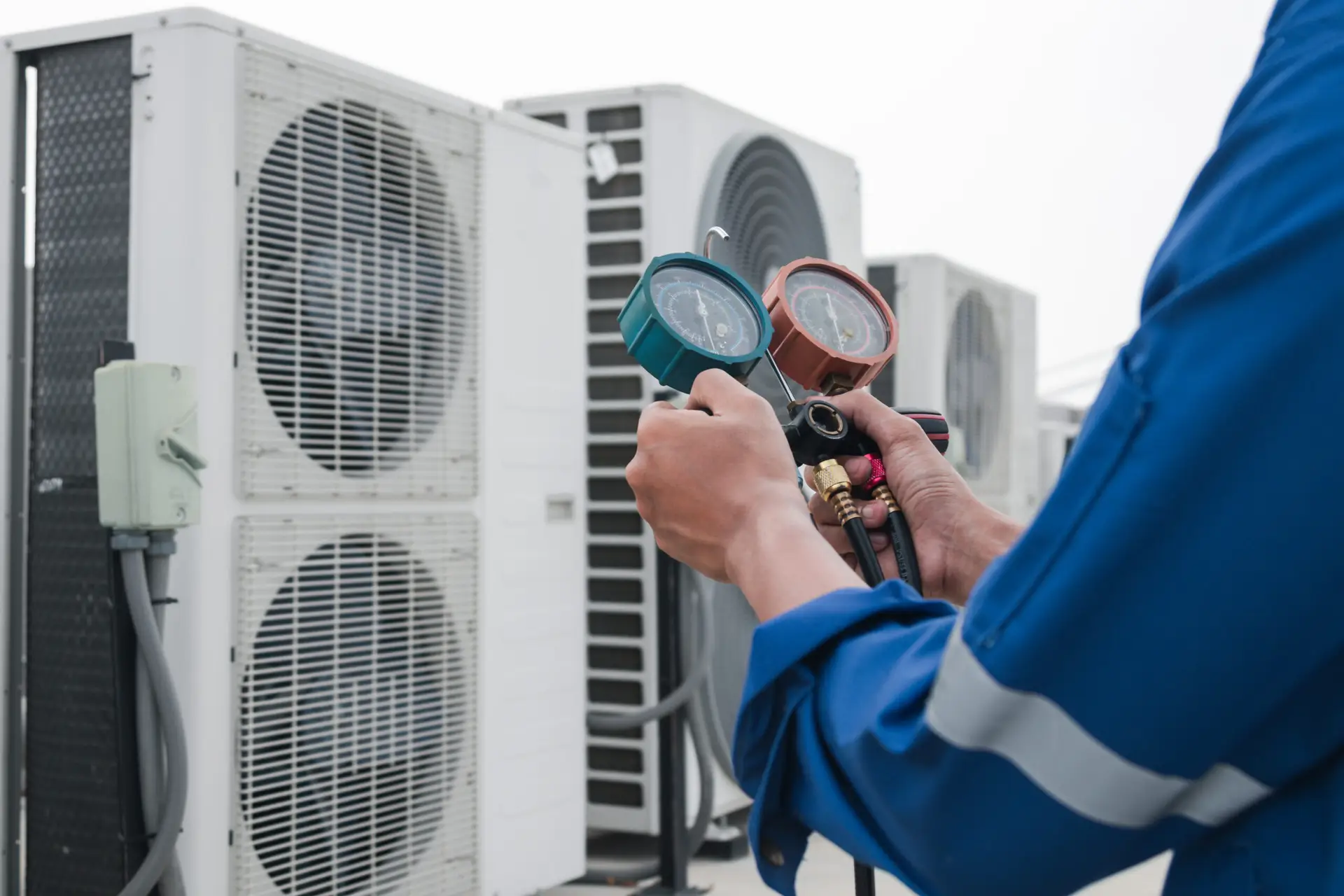
If a technician opens a refrigerant circuit, EPA Section 608 certification is not optional and not a marketing credential. It is a federal requirement for anyone who maintains, services, repairs or disposes of equipment that could release ozone-depleting refrigerants. It comes in four flavors:
- Type I — small appliances: units with less than five pounds of refrigerant. Reach-in coolers, small ice machines, window units, dehumidifiers.
- Type II — high-pressure equipment: the bulk of what we touch in Las Vegas. Rooftop package units, split systems, commercial cold storage, most walk-in and display case systems.
- Type III — low-pressure equipment: large commercial chillers and central plant cooling.
- Universal: all three.
The practical translation: if you run a restaurant with a rooftop unit and a walk-in, the person servicing them needs Type II at minimum. If you are a property manager with a central chiller plant, Type II alone does not cover it. Asking which type a technician holds is a fair and completely normal question, and a technician who cannot answer it immediately is a flag.
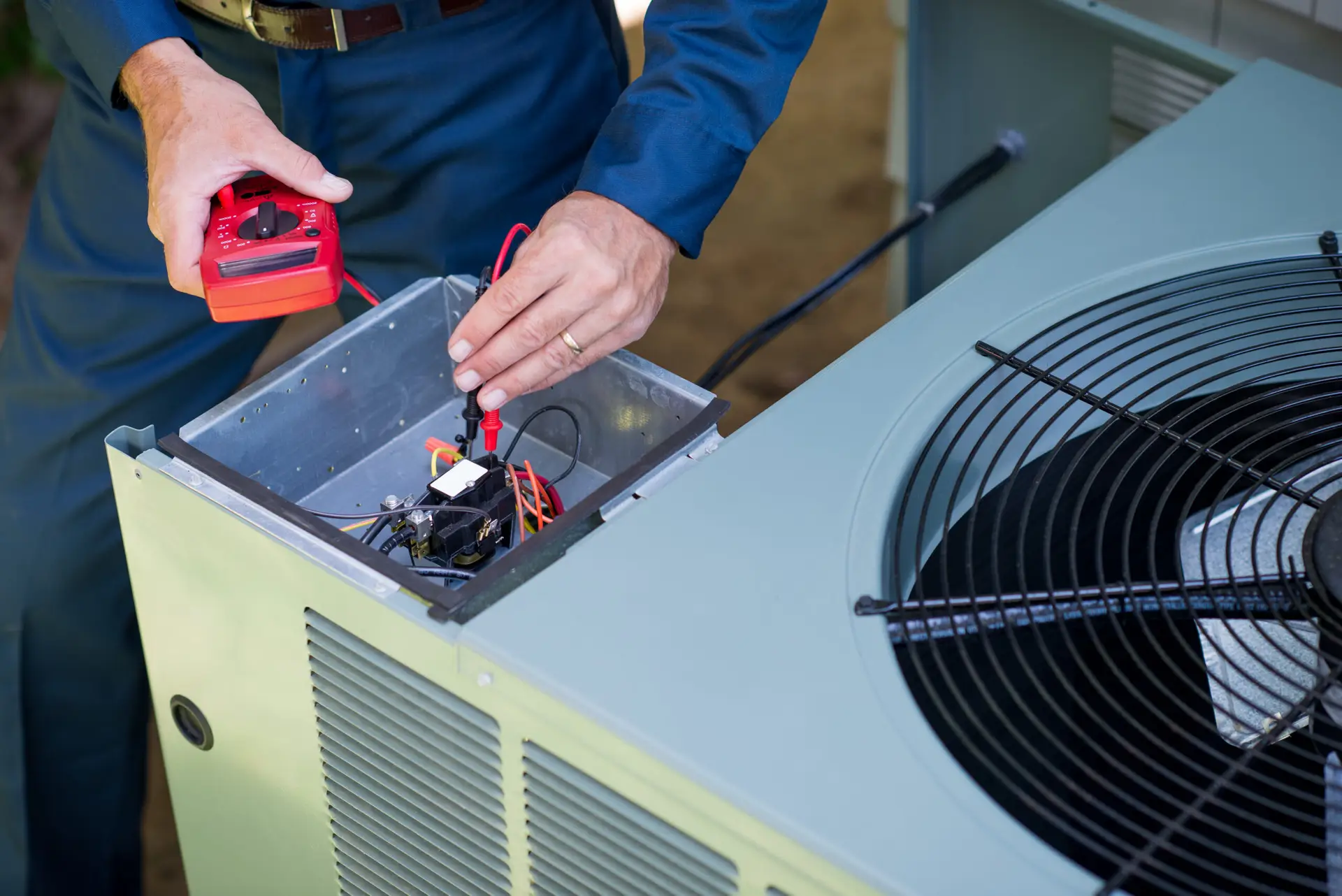
And a caveat we would rather say out loud: 608 is a floor. It proves someone understands refrigerant handling and recovery law. It does not prove they can diagnose a TXV that is hunting, or read a superheat and subcooling pair and tell you whether the problem is charge or airflow.
04NATE and manufacturer training — what they do and don’t tell you
NATE (North American Technician Excellence) is a voluntary, independent certification with specialty tests in areas like air conditioning, heat pumps, gas heating and commercial refrigeration. It is a genuine knowledge test, and it is harder than the 608. What it is not is a workmanship guarantee — it measures what a technician knows on a written exam, not how carefully they torque a flare or how honestly they write up a findings report.
Manufacturer training is narrower and, for certain equipment, more useful. Factory training on a specific line of rooftop units or a specific controls platform is often the difference between a technician who can read the board’s fault code and one who is guessing at it.
05The credentials that never appear on a certificate
Some of the things that most determine the quality of a service call have no certificate at all:
- Hours on the specific equipment. Commercial kitchen hot-side work — exhaust hoods, make-up air, hood certifications — is its own discipline. So is supermarket rack refrigeration. Broad HVAC experience does not automatically transfer.
- Combustion analysis and CO testing discipline. Whether a technician actually puts an analyzer in the flue on a heating call, or eyeballs the flame and moves on.
- Recovery discipline. Whether refrigerant gets recovered properly on every job or vented when nobody is watching.
- Whether you get readings — pressures, temperatures, amp draws — or a line item that says “serviced unit.”
We would rather you judge us on the fourth one than on a wall of logos. Ask for the numbers from your last service visit. If a contractor cannot produce them, the visit may not have produced them either.
06What to ask any Las Vegas HVAC contractor, us included
- What is your Nevada license number and classification, and is it current?
- Does that classification cover this specific scope?
- What is the monetary limit on your license?
- Can you send a COI naming us as certificate holder?
- What EPA 608 type does the technician assigned to us hold?
- Will I get documented readings with the invoice?
- Who is actually performing the work — your employee or a subcontractor?
Any competent contractor answers all seven without getting defensive. If someone gets cagey on question one, you have saved yourself a lot of trouble.
—Talk to us
If you manage a restaurant, warehouse, retail space, office or property portfolio in the Las Vegas valley and you want a Las Vegas HVAC contractor whose credentials you can check before anyone arrives, call Prestige Mechanical at 702-867-5389
We will send you the license and insurance documentation up front — before the quote, not after the invoice.